TAHWILA is an observatory / laboratory in the rural area of the Ricote Valley that aims to allow new forms of encounter and experimentation between diverse discourses and art.
Tahwila“ (تَحْوِيلَة) in Arabic can mean ”conversion,“ ”transfer,“ or ”change.” It can also appear in toponymy (place names) to refer to “cultivated field” or “place of conversion.”
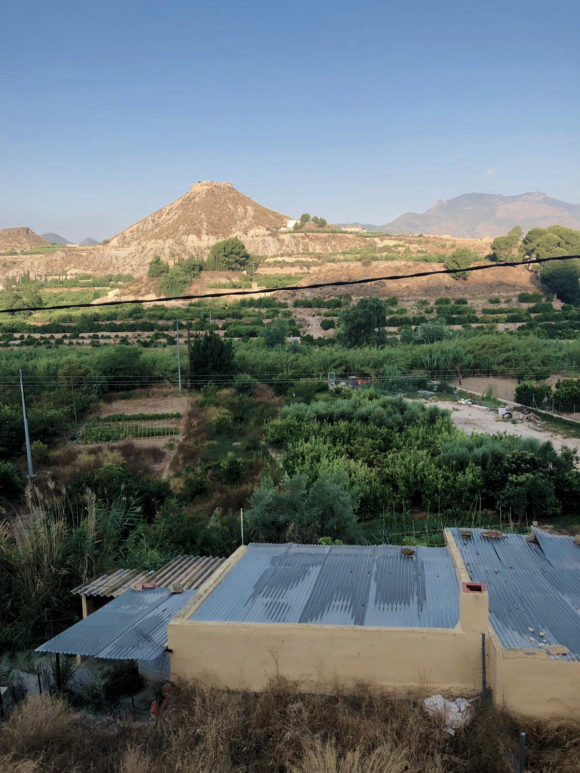
TAHWILA has little more than two tahúllas (2400m2). Being part of the old irrigation system of Alguazas, it is in a heritage and historically agrarian area, it borders the Segura river, the road that connects Blanca with Abarán, has terraces, citrus and olive trees, free areas for experimentation and a building without infrastructure of 70m2.
Location
TAHWILA aspires to cover in the future chapters related to the territory as Critical Spatiality: Water, food systems, biomass, materials, technology, migration, gender, tourism, etc. all as cross-cutting themes within a systemic and metabolic analysis.
The objective is to consolidate in TAHWILA a rural station, which allows new forms of encounter and experimental spaces. TAHWILA seeks to initiate reflection processes of contemporary discourses and to enhance new solidarity and diverse frames of reference around the territory. These will cover intersectional, governance, environmental justice and space ecology issues.
TAHWILA es un observatorio/laboratorio situado en la zona rural del Valle de Ricote cuyo objetivo es propiciar nuevas formas de encuentro y experimentación entre diversos discursos y el arte.
Tahwila (تَحْوِيلَة) en árabe puede significar «conversión», «transferencia» o «cambio». También puede aparecer en toponimia (nombres de lugares) para referirse a «campo cultivado» o «lugar de conversión».
TAHWILA tiene poco más de dos tahúllas (2400 m²). Forma parte del antiguo sistema de riego de Alguazas, se encuentra en una zona patrimonial e históricamente agrícola, limita con el río Segura, la carretera que conecta Blanca con Abarán, cuenta con terrazas, cítricos y olivos, zonas libres para la experimentación y un edificio sin infraestructura de 70 m².
TAHWILA aspira a cubrir en futuros capítulos temas relacionados con el territorio como espacialidad crítica: agua, sistemas alimentarios, biomasa, materiales, tecnología, migración, género, turismo, etc., todos ellos como temas transversales dentro de un análisis sistémico y metabólico.
El objetivo es consolidar en TAHWILA una estación rural que permita nuevas formas de encuentro y espacios experimentales. TAHWILA busca iniciar procesos de reflexión sobre los discursos contemporáneos y potenciar nuevas solidaridades y marcos de referencia diversos en torno al territorio. Estos abarcarán cuestiones interseccionales, de gobernanza, justicia ambiental y ecología espacial.
Español abajo
TAHWILA is an observatory / laboratory in the rural area of the Ricote Valley that aims to allow new forms of encounter and experimentation between diverse discourses and art.
Tahwila“ (تَحْوِيلَة) in Arabic can mean ”conversion,“ ”transfer,“ or ”change.” It can also appear in toponymy (place names) to refer to “cultivated field” or “place of conversion.”
TAHWILA has little more than two tahúllas (2400m2). Being part of the old irrigation system of Alguazas, it is in a heritage and historically agrarian area, it borders the Segura river, the road that connects Blanca with Abarán, has terraces, citrus and olive trees, free areas for experimentation and a building without infrastructure of 70m2.
Location
TAHWILA aspires to cover in the future chapters related to the territory as Critical Spatiality: Water, food systems, biomass, materials, technology, migration, gender, tourism, etc. all as cross-cutting themes within a systemic and metabolic analysis.
The objective is to consolidate in TAHWILA a rural station, which allows new forms of encounter and experimental spaces. TAHWILA seeks to initiate reflection processes of contemporary discourses and to enhance new solidarity and diverse frames of reference around the territory. These will cover intersectional, governance, environmental justice and space ecology issues.
TAHWILA es un observatorio/laboratorio situado en la zona rural del Valle de Ricote cuyo objetivo es propiciar nuevas formas de encuentro y experimentación entre diversos discursos y el arte.
Tahwila (تَحْوِيلَة) en árabe puede significar «conversión», «transferencia» o «cambio». También puede aparecer en toponimia (nombres de lugares) para referirse a «campo cultivado» o «lugar de conversión».
TAHWILA tiene poco más de dos tahúllas (2400 m²). Forma parte del antiguo sistema de riego de Alguazas, se encuentra en una zona patrimonial e históricamente agrícola, limita con el río Segura, la carretera que conecta Blanca con Abarán, cuenta con terrazas, cítricos y olivos, zonas libres para la experimentación y un edificio sin infraestructura de 70 m².
TAHWILA aspira a cubrir en futuros capítulos temas relacionados con el territorio como espacialidad crítica: agua, sistemas alimentarios, biomasa, materiales, tecnología, migración, género, turismo, etc., todos ellos como temas transversales dentro de un análisis sistémico y metabólico.
El objetivo es consolidar en TAHWILA una estación rural que permita nuevas formas de encuentro y espacios experimentales. TAHWILA busca iniciar procesos de reflexión sobre los discursos contemporáneos y potenciar nuevas solidaridades y marcos de referencia diversos en torno al territorio. Estos abarcarán cuestiones interseccionales, de gobernanza, justicia ambiental y ecología espacial.